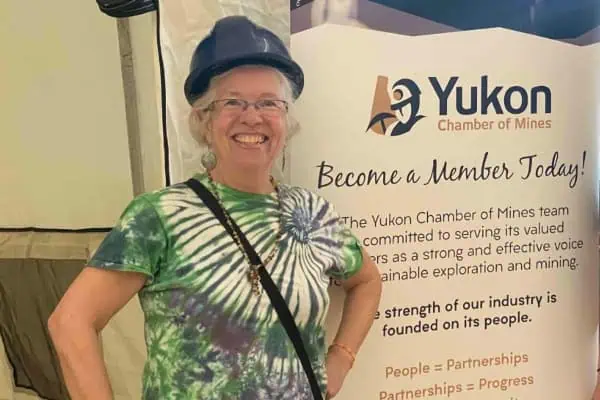
This is the story of how a few people with a good idea and the will to put it into action changed the Yukon for the better
How a few dedicated volunteers transformed recycling in the Yukon
By Ben Charland, Judy Dabbs and Janne Hicklin
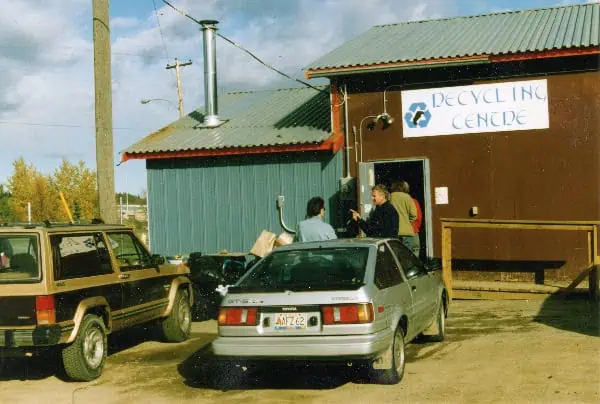
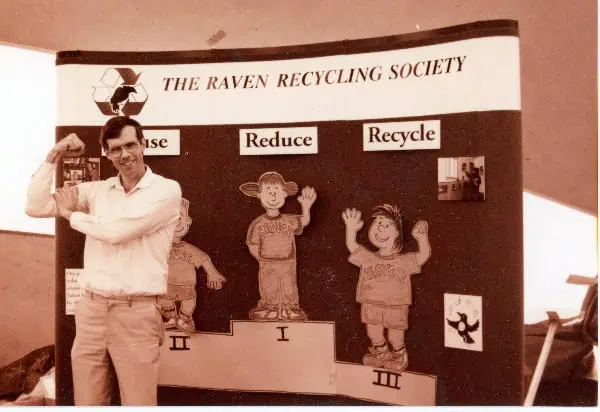
On a chilly Saturday morning in June 1989, a small group of friends arrived at the old Jim Light Arena in Whitehorse. They had booked a kiosk for the farmers’ market that summer with a simple idea: collect aluminum cans and pay a penny each.
Janne Hicklin and Anne Taylor stood behind that first collection table. They wondered, if recycling was happening elsewhere in the country, could it not happen in the Yukon too? After connecting with national environmental groups, the two women realized the answer was yes — but only if people like them made it happen.
This is the story of how a few people with a good idea and the will to put it into action changed the Yukon for the better. What seemed both modest and wildly ambitious at the time became the seed of something great: a community-led environmental effort in an era when recycling was merely gaining traction in the South and virtually non-existent in the North.
At first the group, which soon included Judy Dabbs, covered the penny-per-can refund from their own pockets. They then turned to metal recycler Joe McInroy who agreed to buy the cans for the same price. Eventually, the Whitehorse Chamber of Commerce pitched in an extra cent.
Word spread, and soon people were bringing enormous bags of pop cans to the three-hour weekend collections. The penny incentive sent people to collect beer and pop cans from road ditches in the spring and summer.
But what drove these pioneers wasn’t just concern for landfills. It was a vision of community transformation and responsibility. The group wanted their initiative, which would become the Raven Recycling Society, to showcase social responsibility where employees could earn a decent living and community members could overcome barriers to employment or stability.
Val Loewen was also involved during the first summer, and today she remains active on Raven’s board of directors. For her, these fundamental principles remain unchanged. “I’m proud of its role in the community and the social enterprise that it’s become,” she says, “and that it’s always trying to walk the good path in terms of waste management.”
After forming a committee through the Yukon Conservation Society, the group expanded beyond cans to glass containers, thanks to a partnership with the Yukon Liquor Corporation. The founders soon discovered the unique challenges of running such an operation in the Yukon. Volunteers had to painstakingly remove metal bands from the necks of many glass bottles. There were also enormous transportation costs, limited and unstable markets, harsh winters, and scarce funding that demanded countless volunteer hours to write proposals.
That’s why they chose the name “Raven”, a bird that is ubiquitous across the Yukon and known as nature’s own recycler, endlessly searching through discarded materials. Like the intelligent bird, the new organization would have to be creative, resourceful and adaptable to turn waste into value.
A significant early breakthrough came with the “PaperSave” program, which introduced paper recycling to government offices. PaperSave was the first government-led entry into institutional recycling in the territory, with various government offices participating to separate white, coloured and glossy paper.
A flurry of media coverage from 1989 to 1991 reflected the community’s growing environmental consciousness and hunger for solutions. Both the Yukon News and the Whitehorse Star tracked Raven’s growth from a grassroots effort to an established not-for-profit business. This attention catalyzed public awareness and multi-level government action. Raven was clearly responding to a deeply-felt need.
In 1992 the Yukon Government’s Beverage Container Regulations allowed Raven to process a wider range of materials. When the seasonal farmers’ market closed, Raven moved into a warehouse provided by White Pass & Yukon Route, then to Industrial Road where Raven ReCentre continues to operate today.
Around this time, Raven developed educational programs and school presentations, which took a cheeky, impactful approach to engage students. “Auntie Litter” was a memorable character in a green robe with a black stripe for the highway, complete with the dotted yellow line and little velcroed objects representing litter in the ditches. Students literally plucked litter from the costume and — hopefully — went home to teach their parents.
From humble beginnings, Raven transformed community attitudes toward consumption and waste, created local jobs with fair wages in an industry that often struggles for viability, and pioneered environmental education. Yet for all its accomplishments, the journey has had its share of challenges, and the work is far from over.
“When we started, we didn’t really want to be doing this for so long,” says Loewen. “We thought maybe ten years, you know, and then it would all be settled, and we could go on about our lives.”
This candid assessment points to larger systemic challenges beyond what any single organization can address. The rise of non-recyclable packaging, complex materials, and economic barriers make sustainable systems difficult to maintain.
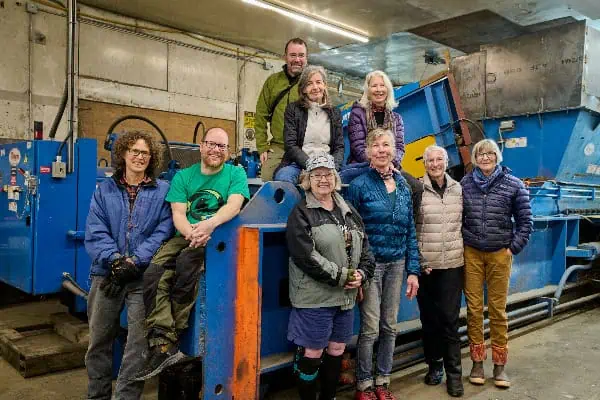
Thirty-five years later, Raven continues to evolve with nearly 35 well-paid employees who work in collection, processing, the expanding ReUseful Store, education, community outreach, and more.
Executive Director Shannon Powell says that “as Raven transitions from a traditional recycling depot to a comprehensive ecocentre recycling a wide variety of material, we’re reshaping our mission for the next generation.”
Through its five-year Getting to Zero Waste plan, Raven aims to become the Yukon’s leader in Zero Waste initiatives and filling recycling gaps in the territory. “We envision Raven as a knowledge hub,” says Powell, “leading innovation in the industry, empowering youth, and fostering national connections.”
When asked what advice they would give to those hoping to create similar community-led initiatives, Raven’s founders emphasize the importance of finding like-minded people and connecting with community resources.
Loewen adds with a laugh, “You need people with vision to make it happen — to roll the ball at least part way up the hill. Then you need others to get in behind and keep pushing.”
Progress often happens not through grand policies or technological breakthroughs, but through the persistent efforts of community members who simply refuse to accept the status quo.
From a penny-a-can collection in Whitehorse’s old arena to a territory-wide force for environmental stewardship, Raven’s journey is about vision, determination, and community support, and how these can sustain even the most difficult endeavours.
As Raven approaches its 36th birthday, the path ahead may be as challenging as the road behind. But the spirit that animated those first Saturday collections remains unchanged. Passionate local action matters. Sustainability requires persistence. And the future of our environment depends on an engaged community willing to roll up their sleeves and do the work. Like the raven itself, Raven ReCentre continues to adapt, inspire and lead the way.