
The critters that are out and about


Life under the ice
Lots can be said about a beaver’s life … How gloomy I would be if I had to live under the ice for half a year. Picture the river otter sliding, more than anything else, across the cold, frozen lake. Being a mink might not be for everyone, either, as they’re never standing still.
Beaver — the Yukon’s beloved (or not), swarthy rodent
The busy beaver’s favourite food is a carrot, and if that’s not available, then birch and poplar will do, as well as willow and aspen. There are so-called bank beavers that dig into a riverbank and make their den in-between a tree’s root system.
A grizzly will dig up and totally destroy a beaver’s home so the beaver is forced to quickly ( before the ice starts growing) find a new, suitable spot to live in. We have a very old beaver castle at the near end of our lake’s drainage system into the river. We noticed a beaver building his dam (just past his lodge towards the river) even higher last fall, but then there were no willow branches stashed anywhere close to his apartment complex.
Sitting at the table after supper, at twilight, we observed a beaver dragging big willow branches from the right side of the lake to the left side. Aha! … so they have moved. Maybe the old lodge was just too decrepit and they were wishing for something new and shiny. They’ve piled a lot of mud on top of the lodge, to insulate and make it their own. Lots of dwarf willow behind their digs and along the shore were gnawed off.
Other visitors to the lake
At the end of March, I strapped on my snowshoes and headed south, walking on the trail, which is snowed in now because we stopped trapping by snow machine at the end of February. On my stroll, using snowshoe poles for balance and ease of walking, I saw a wolf’s paw prints, a big wolverine track, lots of squirrel tracks (and them watching me from a safe distance) and, finally, a mink’s course.
It kind of looked like a marten’s tracks, but in-between there was a “slide,” and martens do not do this. Mink weave in and out of the trees that sit along the water’s shore, to check on the muskrats.
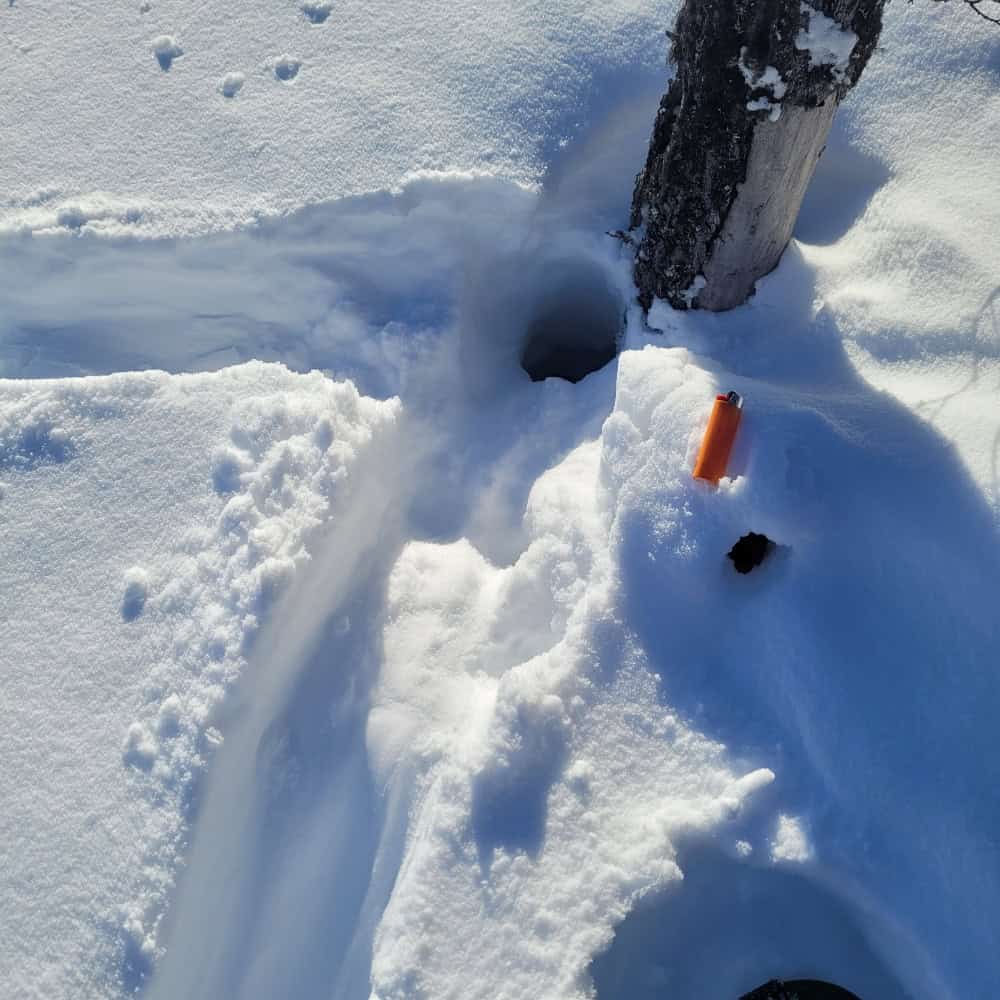
The otter, I think, enjoys round trips. He heads off the river, overland, along the side channel, down a little creek, then hits our lake. We’ve watched him come out of one open spot, along the frozen lakeshore, and hop into the other one close by. From there I don’t know where he went. Otters are built to slide and do that even more than “hop-walking.”
A tree must withstand many assaults
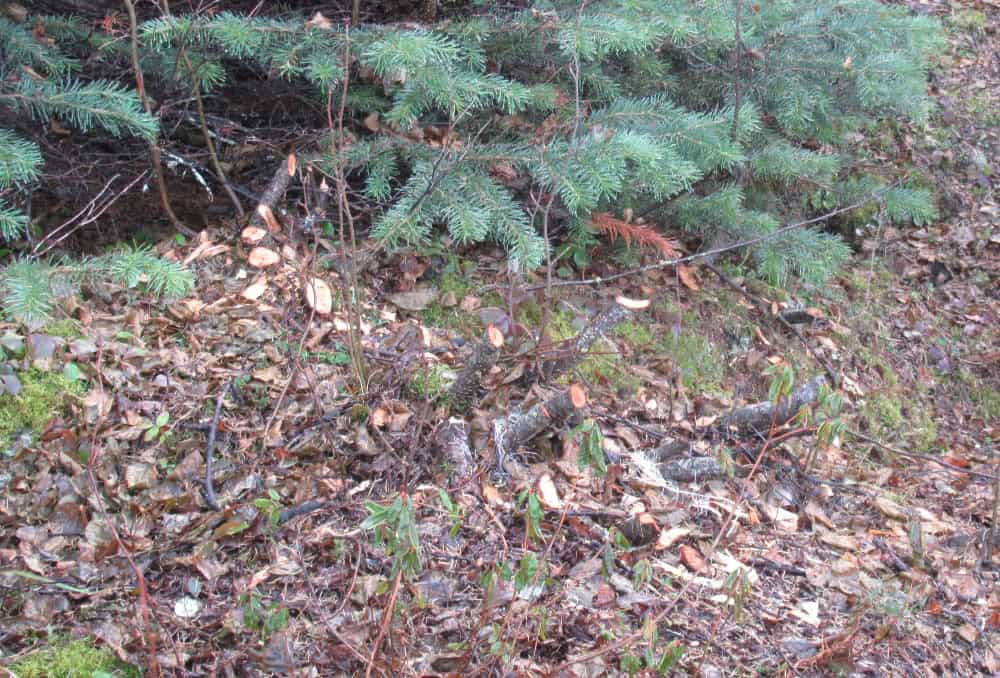
While wolves will just spray urine onto a tree to mark their territory, the mighty male moose will try to destroy it. Before the rut, the big northern ungulate’s velvet, which covers its antlers, starts to get itchy. The velvet is a soft, hairy layer of skin that is full of blood vessels and nerves that supply nutrients to the growing antlers.
When the antlers are done growing, the skin dries, itches and is rubbed off. The moose moves his head left and right in order to have the itching stop, scraping along bigger sapling stems. It looks funny when, in full rut, a tall, grunting moose stalks along with pieces of dwarf birch and willow laying horizontally in his antlers from—literally—beating around the bush.
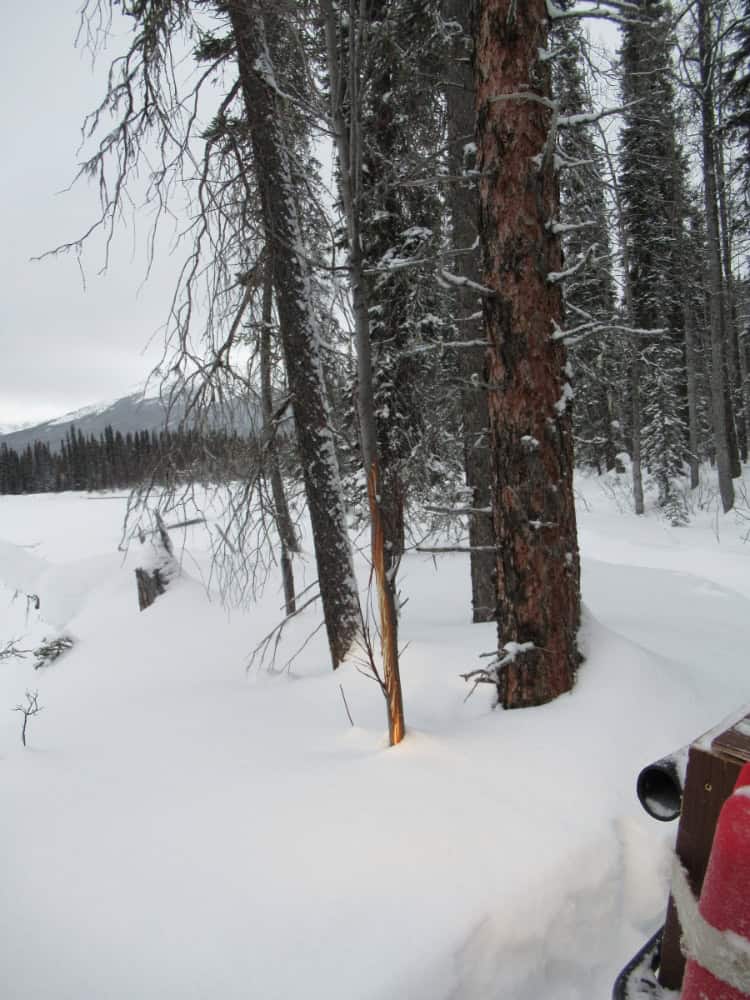
In late winter, moose may use their front teeth to scrape bark down from the aspen trees, in order to get to the nutritious layer of cambium.
The moose’s other enemy, besides the wolf, is the grizzly bear. He is a master at marking his territory: around here, every 400 metres or so, there are trees that sport light-brown hair. The bear’s back must be itchy more than not, as the spruce bark ends up looking the colour of ochre from a grizzly’s muddy pelt. This huge predator first sniffs around the tree, then stands up on his hind legs to joyfully wiggle his back left to right and back.
Some trees are marked by their weapon-like claws—another powerful demonstration to force the lowly human back to their safe (safer) cabin. Out here we see, on pictures taken by our wildlife cameras, the big bosses: our cabins show claw marks where bears are trying to get admitted into a dry place, ripping splinters off our log walls (so far, thankfully, just on the outside).
Grizzlies are so strong. I wonder, sometimes, how it is possible for them to become such a “force of nature.” Is it their vegan diet? I’m sure they expend quite a bit of energy when digging for a few thin roots of Eskimo potato and horsetail. They can eat up to 200,000 berries a day in fall’s feeding frenzy. Of course we know that, when available, they’ll eat meat, as well, covering it with the earth that’s around it, to have it, in time, tenderized.
(When you get to a cabin and nothing inside is in the same spot anymore, it might have been an investigative wolverine.)
Sonja Seeber, Yukon trapper


