
A natural medicine chest waiting to be discovered
Many associate foraging for wild medicines and foods mainly with the snow-free months of the year, but there are actually several very resilient plants that are here for us even when the north wind has blown off the last of the autumn leaves and snow has begun to fall.
In fact, it almost feels like these hardy plants are here for us by design just when we need them most. Flu season, the peak time for influenza, varies from year to year but it generally begins in the fall and continues on through the winter and early spring.
Even if you practise exceptional hygiene and have an active and healthy lifestyle, it’s possible that you’ll get sick sometime this year.
Whether you want to give your immune system a little extra boost before you come down with something, or you feel as if it’s already got you, here are a few natural healing allies we’re lucky to have available to us here in the boreal forest of northern Canada. Not only do they all have superpowers to share in terms of combating flu season, they have a long list of other benefits as well.
Whenever you go foraging, be sure to properly identify what you’re harvesting. Spend some time researching its correct use. Take only what you need. Be respectful and show your gratitude in whatever way feels natural to you.
Cranberries

This is probably the best-known plant on this list. Picking cranberries in the fall is a favourite activity for many Yukoners. Sometimes known as lingonberries, or by a variety of other names, cranberries can be found in circumpolar regions around the globe.
They’re famous for their healing effects on urinary tract infections, they stimulate the production of digestive enzymes, and also improve appetite. They’re very high in vitamin C and other immune-supportive nutrients, making them an excellent addition to your diet during flu season.
The best time to pick them is any time after the first frost, because they’ll be sweeter. As the snow begins to pile up, they’ll become harder to find, but you may come across some still hanging onto their branches after the snow melts in early spring. Birds and bears also enjoy them.
Juniper
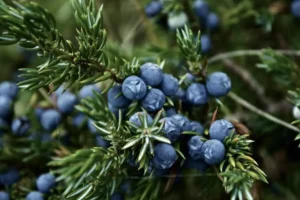
Although referred to as berries, juniper berries are actually female seed cones. They take up to three years to ripen and turn dark blue, and you can often see green “berries” on the same plant. The needles have antimicrobial qualities and these can be gathered at any time.
Like cranberries, juniper has often been used for urinary tract health, bladder infections and to prevent or cure a cold. Juniper berries can be used as a seasoning, a trail snack and even as a survival food. The dusty white powder on the surface of the ripe blue berries is a type of yeast. You can add a few to your dough the next time you’re making bread to give it an extra nudge.
Traditionally juniper has been used as a tea for sore throats, congestion, chest pains and other respiratory problems. The branches can be used in saunas and were historically burned in hospital rooms to disinfect and cleanse the space. The berries are used to give gin its unique flavour; the smell of juniper wood is said to repel moths; and the ashes of the burnt twigs can be used as a powder for brushing your teeth.
Juniper is a very powerful medicine and should be used in moderation. It’s not recommended for people who have kidney problems.
Rose hips
While cranberries and juniper berries can quickly become hidden after the first big snowfall, rose hips–thanks to their height–can be found and enjoyed for much longer. These vibrant red “hips” are easy to spot, especially against a blanket of white snow.
As the winter progresses they will become softer but their high levels of vitamin C and other antioxidants will remain present. Whether you dry them for tea or freeze them to later turn into jam, jelly or syrup, rose hips make an excellent cold remedy and a powerful immune system booster.
Avoid eating the tiny hairs inside that surround the seeds as they can irritate your mouth and intestines if you eat a lot.
Spruce sap and needles
Spruce tips are harvested in spring but the other parts of this highly versatile tree can be gathered year-round. Although often used as lumber and as firewood, spruce has so much more to offer.
Cambium, the inner bark of the tree, is a traditional survival food. It can be eaten raw, boiled like noodles or dried and ground into a flour. Spruce branches, much like juniper needles, are a wonderful addition to a sauna when placed on hot rocks and splashed with water. They release an aromatic and antiseptic steam and it’s said that inhaling the vapour from the boiled needles can help with bronchitis.
Spruce is also another excellent source of vitamin C. Spruce tea (made from the needles or the sap) can be used for coughs, colds and congestion. It’s been used to help with pneumonia, whooping cough and croup and according to Beverley Gray’s book “The Boreal Herbal”, spruce gum (sap) can be used as a lozenge for coughs and sore throats. It can also be used on an open wound to protect it from germs thanks to its antimicrobial and antiseptic properties.
Usnea
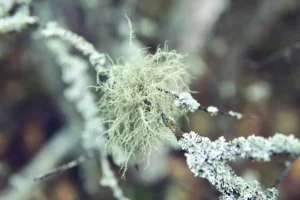
Usnea, also known as Old Man’s Beard, is a type of fruticose lichen that can be found growing on spruce trees and contains high levels of usnic acid, which has been used as a mild antibiotic for generations.
Thanks to its anti-viral, antibacterial and anti-fungal properties, usnea has been used for bacterial infections, strep throat, pneumonia and bronchial problems. Internally, it can be taken as a slow simmered tea (decoction) or as a tincture and externally as a powder for wound care (such as for staph infections) or an anti-fungal bath. It combats fever and inflammation and supports a healthy immune response.
Like all lichen, usnea grows very slowly so it’s best to harvest just a little bit, preferably after a big storm, when you can pull it off of fallen trees and branches.
*Always use herbal medicines in moderation*
Sources
- Discovering Wild Plants: Alaska, Western Canada, The Northwest by Janice J. Schofield
- The Boreal Herbal: Wild Food and Medicine Plants of the North by Beverley Gray
- Gwich’in Social and Cultural Institute gwichin.ca/plants
- Harmonic Arts youtube.com/@harmonic_arts


