Animals leave clues behind from their behinds
Catching a glimpse of an animal when out on the land can be a thrilling experience. In the vast Yukon landscape, at that exact moment, you can cross paths with something special. But seeing the animal itself is sometimes quite challenging. More often you’ll see signs that you’re sharing the land with a furry or feathered critter.
Tracks in the snow, sand or mud will show us what animal passed by, but there are other signs, such as scratches, diggings or stripped bark, that will give us some more clues. Clues such as poop can be found just about anywhere.
Scat (that’s the technical term for animal poo) shows us a lot about where an animal lives, what it eats and even how it’s feeling. If you’re wondering who is sharing a trail with you, look for scat on the ground.
Who’s living here?
Large or frequent piles of the same type of scat will tell you that something has made their home in the area. If you see it repeatedly, it’s likely the critter wasn’t just passing through but that they’ve got a den or nest nearby.
Bird guano (bird and bat poo gets its own technical term) might coat the side of a rocky cliff or tree trunk. Look above the streaks for a nest. Sometimes certain lichens will grow on the rocks or branches, fertilized by the guano. It grows continuously in well-used sites, showing us that a bird has been nesting there for many years.
A pile of bat guano at the base of a tree, or perhaps inside your garden shed, will show us that a nursery colony has moved in. Though it may look like mouse droppings, bat guano will pile up in one location as the bats return to the same roost every morning.
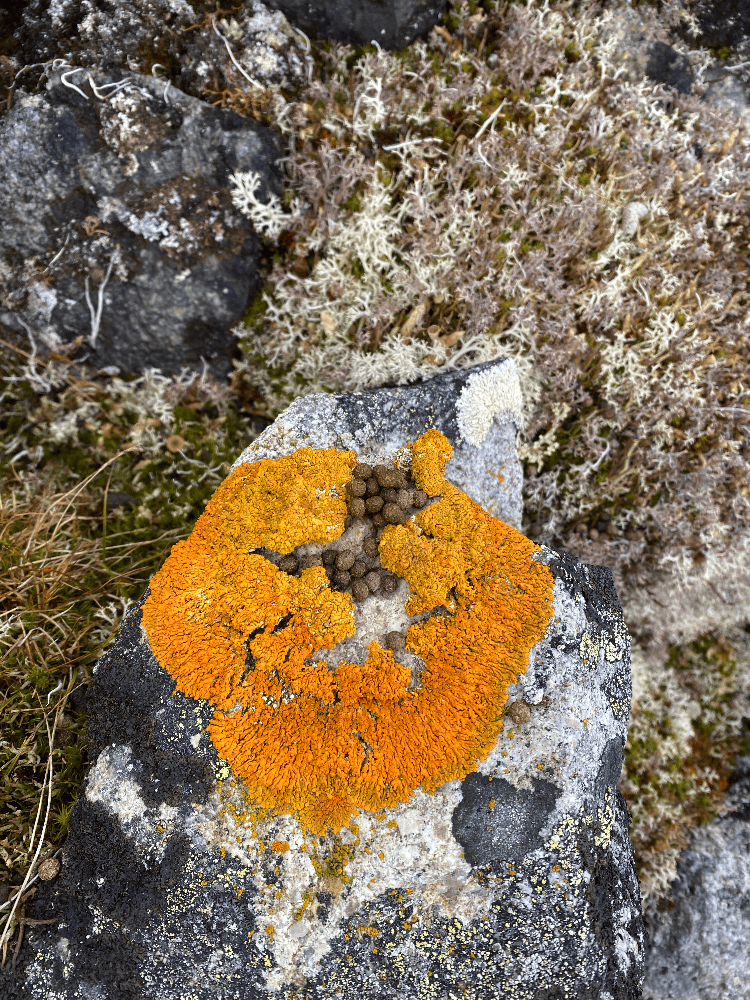
When you’re hiking in the alpine across a talus slope, look for piles of “peppercorns” on a flat rock. These are the latrines of the collared pika. Pika are very refined and repeatedly use the same place to defecate, rather than dirtying their homes.
What was for dinner?
Getting a closer look at scat can show us what’s on the menu. Soft piles can mean the animal has been eating fresh green plants with lots of moisture. Carnivores cannot digest everything they’ve eaten, so bits of bone and fur will show up in their scat.
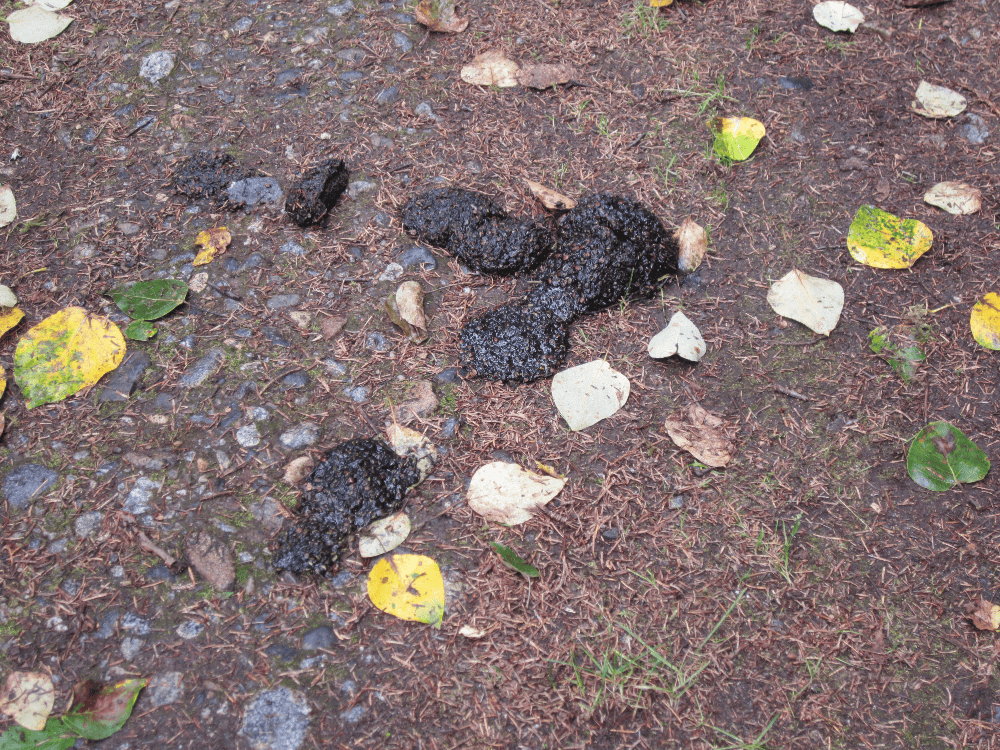
Bear scat can show us what berries are in season. Look for large, dark piles full of seeds. Finding a pile of bear scat and checking to see how soft it is can also tell us if a bear passed by recently or several days ago.
Grouse and porcupines eat hard, woody vegetation, so their scat resembles sawdust wood pellets like what you might put in the bottom of a hamster cage.
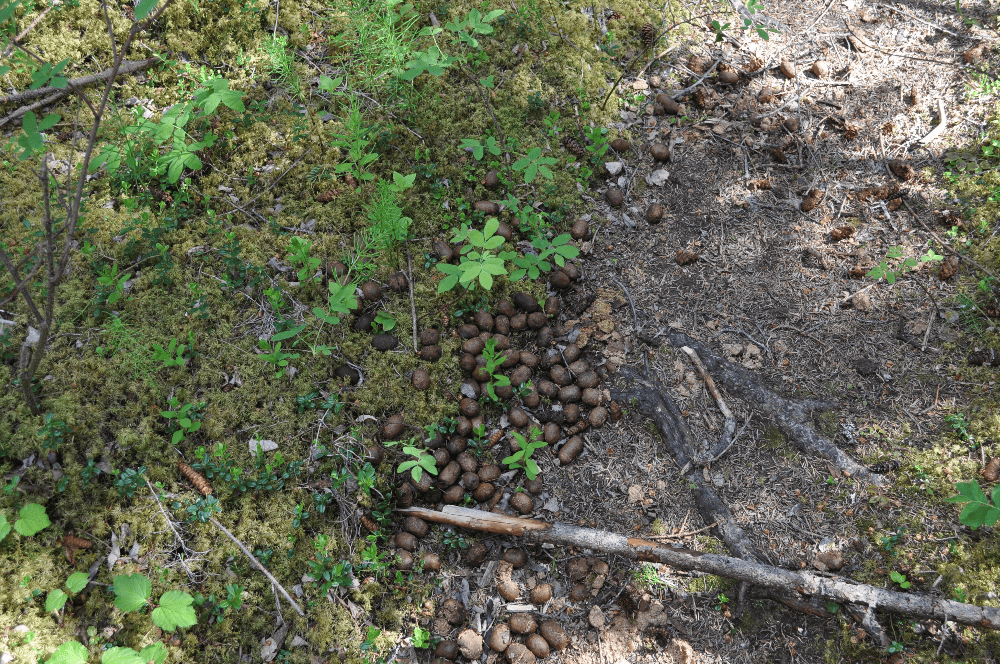
Ungulates eat vegetation and their scat forms hard pellets. The pellets are usually oval-shaped, and size varies according to species. An easy way to remember is that moose scat looks like chocolate-covered almonds; elk scat resembles chocolate-covered peanuts; caribou scat resembles chocolate-covered raisins. There are other differences in their shapes, but the chocolate-covered-treats analogy is a good place to start.
An important ecological service
As funny as it sounds, animals pooping all over the place is an important step in the ecological cycle. Many plants have evolved to be eaten so that animals will help them propagate. Berries are delicious and often conceal a seed inside. The animal eats the berry but is unable to digest the seed. When they poop, the seed of that plant is spread to a new location, allowing a plant to start colonizing a new area. Stepping in poop isn’t a great experience, but take comfort in knowing you’re also contributing an ecological service.
Next time you’re out for a walk, have a look for scat, to discover what animals might be sharing the area with you. If you’re really curious, pick up a field guide with more-detailed descriptions so you can figure out “who dung it.”