
The 1st Canadian Ranger Patrol Group is located throughout the Yukon, the N.W.T. and Nunavut, as well as in Atlin, B.C.
“We have Ranger instructors and Junior Ranger instructors, and they’ll come over once in a while for a main exercise, but mostly it’s the Rangers in the community that do the training of the Junior Rangers and work with the youth of our community.”
Ranger Sergeant Wade Istchenko

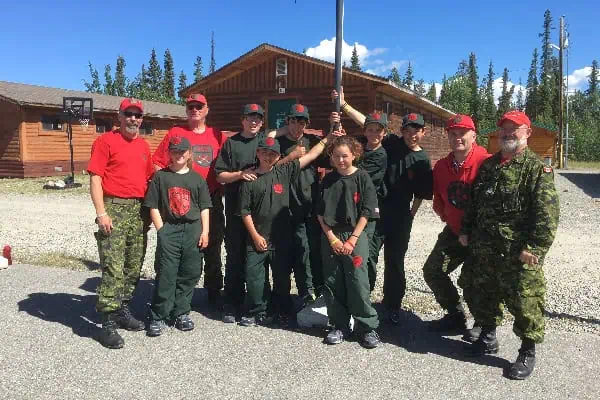
The 1st Canadian Ranger Patrol Group (1 CRPG), headquartered in Yellowknife, has several patrols around the Yukon in communities including Haines Junction, Pelly Crossing, Ross River, Dawson City, Old Crow and more. A number of Junior Canadian Ranger (JCR) patrols also operate around the territory, with a new one set to launch in Whitehorse.
“We’ve got many Junior Rangers programs in the territory, and we have since 1998,” says Ranger Sergeant Wade Istchenko. “It’s sort of the stuff the Rangers do, but the Junior Rangers do it. It’s been a very successful and active organization in many communities across the North and it helps guide the youth in northern communities and gives them many, many opportunities to do a lot of different stuff.”
Istchenko was one of the Rangers approached by high-ranking members of the organization, back in the late ’90s, who had concerns that youths aged 12 to 18 could benefit from a similar program geared towards a younger demographic, especially in rural communities across the three territories.
“We just finished up, in the summer, an Enhanced Training Seminar (ETS) for the Junior Rangers,” says Istchenko. “Over two-hundred kids come to Whitehorse and they get to do whitewater rafting, horseback riding and some traditional skills like trapping. Just about everything the Rangers do, they get to experience, and they get to meet other Junior Rangers from different areas.”
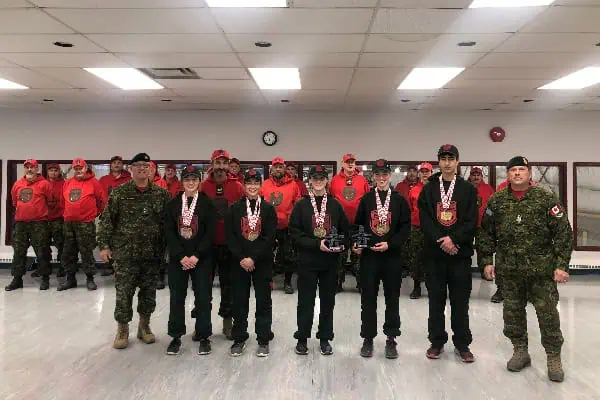
Istchenko is based in Haines Junction and says his community’s Junior Rangers patrol has been the top air rifle shooting team in Canada for the past five years in an annual shooting competition.
“We’re really proud of our kids,” he says. “Some of the other communities will all send scores in, and they send the top shooters to somewhere in Canada where they shoot against other Junior Rangers, so that’s another good thing that they do.”
The Junior Rangers are also given the opportunity to train with the seasoned regular Rangers patrols.
“We have Ranger instructors and Junior Ranger instructors, and they’ll come over once in a while for a main exercise, but mostly it’s the Rangers in the community that do the training of the Junior Rangers and work with the youth of our community.”
Harry Kern, a Ranger with the Carcross/Tagish patrol, has been involved with the Rangers since 1992. For Kern, the Rangers is a valuable program to teach northerners necessary survival skills for the climate they live in.
“There are many facets to our Yukon community,” he says. “There’s the city of Whitehorse, which is in most respects a city just like Vancouver, Toronto or Edmonton, or any larger centre. But we’re surrounded by a lot of smaller communities that are still rubbing shoulders with the bush and where many of the people living in those communities still interact with the wilderness on a regular basis. I just feel it’s important to have a general involvement with those communities.”
Kern remembers feeling a sense of relief upon joining the Rangers program, seeing the federal government recognize “the value of frontier wilderness experience and knowledge.” He found cities overwhelming and yearned for proper education on how to live safely and successfully off the grid.
“The emphasis was more and more and more on living a city life, and there was less and less value in knowing how to sharpen an axe, how to build a fire, how to hunt—we were just losing touch with nature.”
On his first 10-day exercise that he underwent in training, Kern was thrilled to see that the Canadian government was placing value on having rural citizens be part of society and to have their skills recognized as being useful.
“It was a great sense of relief and it made me very happy to think that the federal government was actually officially recognizing something besides the modern world. I think that is still really important.”
A subcomponent of the Canadian Army Reserve, the Canadian Rangers operate in remote, isolated and coastal regions of Canada. With a total of five groups, the 1st CRPG accounts for the three territories. Rangers are Canadian Armed Forces members who are on duty when training. The patrol leaders, Canadian Ranger sergeants are internally elected. There are around 5,000 Canadian Rangers in more than 200 communities across the country.
Master Corporal Christopher Camenzuli of the Carcross/Tagish Patrol has lived in both the N.W.T. and the Yukon over the past 20 years. With a background in social work and a career spent supporting youth, he dedicates as much time as he can to developing outdoor survival skills and hopes to be able to pass them on to younger folks as well.
“The Canadian Rangers play a vital role in Northern Canada, providing support in times of emergency, contributing to community resilience and preserving Traditional Knowledge,” he says. “We serve as a bridge between military readiness and local understanding, especially in remote areas where resources are limited.”
Camenzuli says being a Canadian Ranger is part of what gives him his sense of connection to his community.
“I take pride in preserving northern traditions and serving in a meaningful way,” he continues. “Working with the Junior Canadian Rangers allows me to mentor youth, help them build confidence, and develop practical skills. I value the outdoors, hands-on learning and the responsibility that comes with this role. Sharing those values with the next generation is one of the most rewarding parts of the job.”
Istchenko says that lots of the Junior Rangers who stay in their communities or come back to them continue on in the organization, becoming full Rangers. While some might go off to university or other life ventures, Istchenko believes that having been involved with the Junior Rangers is something that can provide valuable life lessons and skills to anyone who participates in the program, whether they choose to stick with it into adulthood or not. Istchenko hears from lots of people that there isn’t much for kids to do in northern communities, so for him it’s important to run programs like the Junior Rangers so there can be productive and healthy outlets for youth in remote areas.
“If you’re between the ages of 12 and 18 and you want to be a Junior Ranger, you can,” he says. “It’s not like there’s a criteria, by any means. You’ve just got to be between those ages. It’s great camaraderie and it’s a great program.”For more about Junior Canadian Rangers, visit junior-canadian-rangers.html. And visit canada.ca/en/army/corporate/canadian-rangers for more about the 1st CRPG.


