
The biennial winter multisport and Indigenous cultural event returns in March
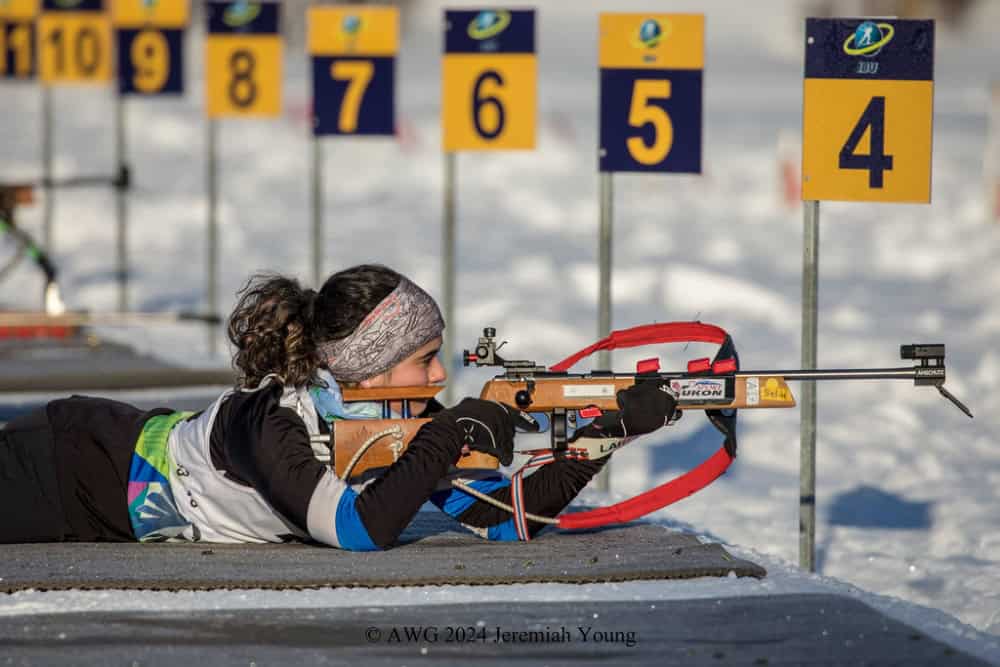


Whitehorse will host the 2026 Arctic Winter Games (AWG) from March 8 to 15. With the 2020 edition set to take place in Whitehorse having been cancelled due to the COVID-19 pandemic, this year marks the Yukon’s first time hosting the games since 2012.
The AWG sees teams from regions of four nations in the Circumpolar North—Canada, USA, Greenland and Sápmi—compete in a variety of sports. Hockey, badminton, cross-country skiing and volleyball are the four sports that have been part of each AWG edition since its inaugural 1970 run, with other sports including basketball, figureskating, snowshoeing, wrestling and Dene Games making appearances throughout the years.
This year, the Government of Canada invested $2.6 million through Sport Canada’s Hosting Program, to support the Host Society in organizing the Games.
“Our government is so excited for Whitehorse’s ability to host the Arctic Winter Games,” says The Honourable Adam van Koeverden, the Secretary of State for Sport. “We’re thrilled that it’s leveraging existing infrastructure that events like the Canada Games and others have brought to Whitehorse, so it’s great to be able to utilize that but also to give it an update.”
Van Koeverden is a Member of Parliament for Burlington North-Milton West, Ont., serving since 2025 as the Secretary of State for Sport in Prime Minister Mark Carney’s Cabinet. With a storied athletic career as a sprint kayaker, he won four Olympic and eight world championship medals, including an Olympic gold medal in the K-1 500m category in 2004.
“Serving my community was my primary motivation for getting involved in politics,” says van Koeverden. “But from a nation-building perspective, and one of my many contributions to politics in Canada, is how much I believe in sports’ ability to change lives for the better.”
The AWG has a legacy of cultural and traditional exchanges between people from different nations, and upholding this tradition is key to van Koeverden.
“The Arctic Winter Games is one of the most important Circumpolar North gatherings, and it does so much for putting Arctic sovereignty in real terms for folks,” he says. We are making sure we are promoting the ability to travel from east to west across the North, and to have those cultural exchanges across nations, across communities and within nations. It’s so important, and that mobility is key. It’s an amazing opportunity, with incredible Games, and I can’t wait to join in March.”
This year will be van Koeverden’s first time overseeing the AWG.
“Communities, big and small, that have to fight to have their culture preserved and showcased, love these opportunities, and we love being able to fund them, to support them and to attend them,” he says.
Tracey Bilsky is the president of the 2026 AWG, a volunteer position appointed by Whitehorse City Council. Bilsky first attended the AWG in Yellowknife, in 1984, when she lived in Faro, Yukon, and has been involved as an adult volunteer for over 20 years now and says that the Games will always hold a special place in her heart.
“From the moment that I was an athlete, I thought it was very special that we could bring all these northern kids together who don’t have the opportunity for these competitive experiences down south,” she says. “It was a really friendly and cultural experience. The Arctic Winter Games are so special because they have culture baked right into them. It’s not an extra thing that’s added on to the side; it’s a genuine expression of sport in the North.”
Bilsky and her team meet with representatives of the different contingents coming to Whitehorse at least once a month leading up to the Games. Because many athletes are travelling from rural northern communities, Whitehorse can be a big city to them, and Bilsky stresses the importance of making everyone feel welcome.
“We want to show them our terrain, and we want to show them our different cultures we express every day here,” she says. “But we also want to show them really good, well-organized competition and the logistics around that. When it comes to [the] Games, the most important things are to feed them well, to house them well and to transport them well.
“That just makes it easy for them to enjoy themselves, to participate, to get to their games on time, to be well-fed and to be happy, then to learn one another’s language, watch one another play and develop friendships that they otherwise never would.”
In February, Yukon University pulled out of the Games as a host venue, over a potential labour dispute, meaning the university cancelled its food-services contract and agreements for the use of the facilities as the Games operations centre, mission offices and transportation hub. This left Bilsky and her team needing to find a last-minute fix, but luckily the elementary and high schools across the city were willing to step up and create accommodations. The athletes will now be fed out of seven different schools, with Porter Creek Secondary School (PCSS) operating the main kitchen and cafeteria.
“The community support in Whitehorse is actually quite extraordinary,” Bilsky says. “People roll their sleeves up and help, or contribute financially, not even for exposure but just because they want to be part of something special. People in the Yukon understand the Arctic Winter Games well and they know what these types of events can bring to a community.”
Van Koeverden says he has been in regular contact with MP Brendan Hanley and came up to the Yukon last September to learn more about the Games and what he can do to support the event’s growth.
“I’m pretty new to [the Arctic Winter Games] but I’m not new to multi-sport games, and I’m not new to the impact that sport has on our country, society and international posture,” van Koeverden says. “It’s just so exciting.”
Whether or not every young athlete goes on to a career in sports, van Koeverden says he knows many people who credit sports with their confidence and leadership qualities, noting that sports can be a way into college and university for youths as well.
“I talk to parents who talk to me about how sport is so important for their kids’ confidence, for their friends and just to get them off of screens for their mental health,” he says. “The impact that sport and physical activity has on youths and young people in their ability to set goals, to work with coaches, to receive feedback and just to be purposefully engaged young people is phenomenal.”
Team Yukon will compete with fellow Canadians Team Alberta North, Team Nunavik-Quebec, Team Nunavut and Team N.W.T.; as well as Team Alaska, Team Kalaallit Nunaat from Greenland and Team Sápmi from the Sápmi region spanning across northern Norway, Sweden, Finland and Russia’s Kola Peninsula. In 2024 in the Games most recent edition, hosted in Alaska’s Matanuska-Susitna Borough, Team Yukon brought home the win.
“There’s really no limit to where sport can take you,” says van Koeverden. “I think the young people who are going to be competing at the Arctic Winter Games get that.”
The AWG will take place in Whitehorse from March 8 to 15. The eight teams will face off in 20 sports, split into four categories: Traditional Sports, Nordic Sports, Indoor Sports, and Ice Sports.
Venues hosting events include the Canada Games Centre (CGC), Mount Sima, Mount McIntyre, the Kwanlin Dün Cultural Centre, Takhini Arena, Grey Mountain Biathlon Range, Yukon Arts Centre (YAC), Yukon Gymnastics Centre and several Whitehorse schools. Visit awg2026.org to learn more about the sports, teams and events at this year’s games. All sporting events are free to watch and will be live-streamed.
“My mind is open, my heart is open,” says van Koeverden. “I’m just looking forward to something brand-new. I learned a lot in September, when I was there, and I met a lot of incredible people, and it’ll be my first one, so I’m just really excited to experience something new for the first time.”
Though van Koeverden has already spent some time in the Yukon, this trip up will undoubtedly be a new experience for him.
“Last time I was in Whitehorse, it was summer,” he says. “I jumped in a lake. I don’t think I’ll be swimming outside this time.”


