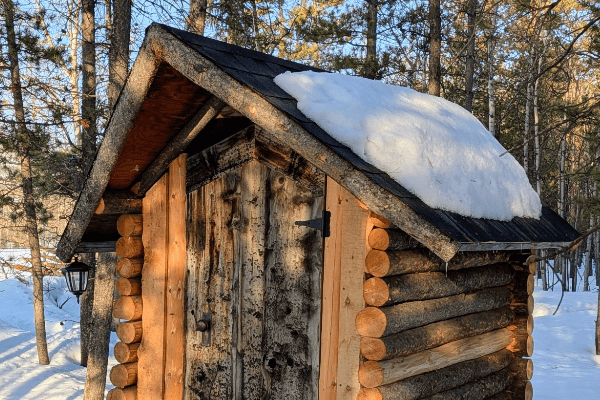
A mid-septuagenarian Yukon retiree, 75, has three readily apparent options for a productive summer fitness program: 1. Fishing, 2. Golf or 3. Firewood.
For the purposes of this piece, your participatory journalist chose the latter because he felt certain he needed at least a 10-cord pile of good firewood close to the front door of the funky old cabin located northwest of Whitehorse, in the electoral district known as Grizzly Valley, within the considerable shadow of Pilot Mountain.
The contractor, 38, who supplied the raw 16” logs over the course of the cutting season is a total marvel at his chosen profession and a Rembrandt in the ancient artform of shrinking dead trees to fit into pits and/or stoves.
For the fair price of $250 a cord, he delivered nine cords, one at a time, in his modified one-ton wood wagon. That fee is a rarity in this remote northern territory, well-known for speculative woodcutters, many of whom charge far more for tinder-dry swamp wood that burns like cardboard.
The fitness fun begins when the wood flies off his trusty truck upon delivery. It takes this old splitter/stacker 20 hours of slow, steady work to process each cord. That means 10 days total because here is the secret to success with old, life-battered muscles: If you only work at it two hours per day, you can go all summer, May through October, from Monday to Friday with Saturdays optional and Sundays a mandatory day of rest, no exceptions. The pudding’s proof is in the pics. Remember this: Firewood is a marathon, not a sprint.
The weight of wood

Yukon firewood is sold by the cord which, as everybody knows, is 4’x 4’ x 8’ or 128 cubic feet. Big companies such as sawmills, pulp mills and lumber producers buy and sell wood by weight using a very simple universal formula to calculate the value of the wood. Professional scalers know exactly how much each kind of tree is worth, from the heaviest (white oak at 5,580 lbs per cord) to the lightest which are larch pines weighing about ten pounds each.
According to Wikipedia, you will find the most common trees sold as firewood in the Yukon Taiga described thusly:
“Boreal forests occur in the more southern parts of the taiga ecoregion that spreads across the northern parts of the world. The boreal forest zone consists of closed-crown conifer forests with a conspicuous deciduous element. The proportions of the dominant conifers (white and black spruces, jack pine, tamarack larch and balsam fir) vary greatly in response to interactions among climate, topography, soil, fire, pests, and perhaps other factors including floods.”
After researching several other wood-buying sites, we averaged everything out and came up with these figures for the approximate weights of a cord of Yukon firewood: 4,250 lbs for green and 4,050 lbs for seasoned.
Any wood cut down between April 1 and Oct. 31 and dried for a minimum of two months can be sold as seasoned. Everything else is considered green. Any wood dried over six months under the midnight sun in summer is considered aged. All that coffee shop chatter about firekill vs beetle-kill is just Joe-talk between sips and bites. It doesn’t matter what killed the tree as much as when it happened.
The optimum amount of moisture content in firewood for maximum heat is 20 to 25 per cent depending on which source you trust.
In summary, our almost 11 cords of split and stacked firewood for the winter of 2022 weighed in at slightly more than 23.75 tons or 47,500 lbs.
That should satisfy just about anybody’s definition of a good summer workout …at least for a 75–year–old former working man with a worn-out Yukon back.