Your sewage has a more-complicated journey than you think
Whitehorse operates with three sewage lagoons. First is the old one, usually referred to just as the Old Lagoon, which was replaced years ago due to capacity issues. It is technically still active, though it’s rarely used. It wasn’t meeting the needs of the population but could come in handy as a temporary sewage hold if ever needed.
The other minor one is the Crestview Lagoon, which only deals with sewage from Crestview. Logistically, it’s easier for the Crestview area to have its own sewage treatment rather than have it pumped to the main facility, which is the Livingston Trail Environmental Control Facility, sometimes just called the Whitehorse Sewage Lagoon. This treatment plant receives most of the city’s sewage.
“The town is growing fast and we’re keeping up with the infrastructure requirements of that,” says Craig Van Lankveld, manager of Water and Waste Services. “So, if you’re in Copper Ridge, for example, depending where in Copper Ridge, and you flush a toilet in your house, that sewage will probably go through a number of sewage lift stations.”
Over at the far end of Copper Ridge, by Stope Way, sewage flows downhill by gravity until it reaches a lift station where it is lifted up and continues its downhill flow. Eventually, it will make its way down to the Marwell Lift Station, the city’s main conduit for sewage pumping. From there, it is pumped through the river and into the Whitehorse Lagoon.
“A lot of the work that we do isn’t required in the actual lagoon,” says Van Lankveld. “A lot of it is required just to keep those pipes and those lift stations operating.”
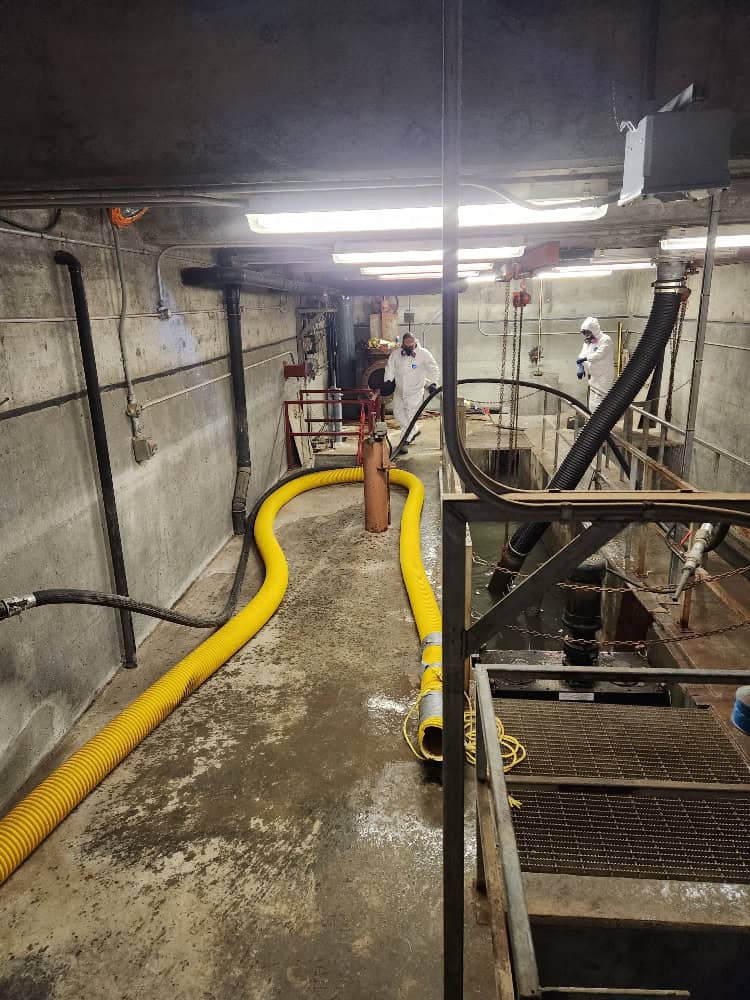
Van Lankveld says residents probably don’t realize how many lift stations there really are around Whitehorse. There are four major lift stations and five minor lift stations positioned around the city. Van Lankveld says keeping them operational comes with a hefty price tag.
“It’s really unfortunate that they’re all incredibly expensive,” he says. “They’re not the sexiest thing to look at; critical infrastructure typically isn’t one of those sexy things to look at, like a park bench or a new program or swingset or something like that. It’s just a very expensive piece of equipment that is critical and required.”
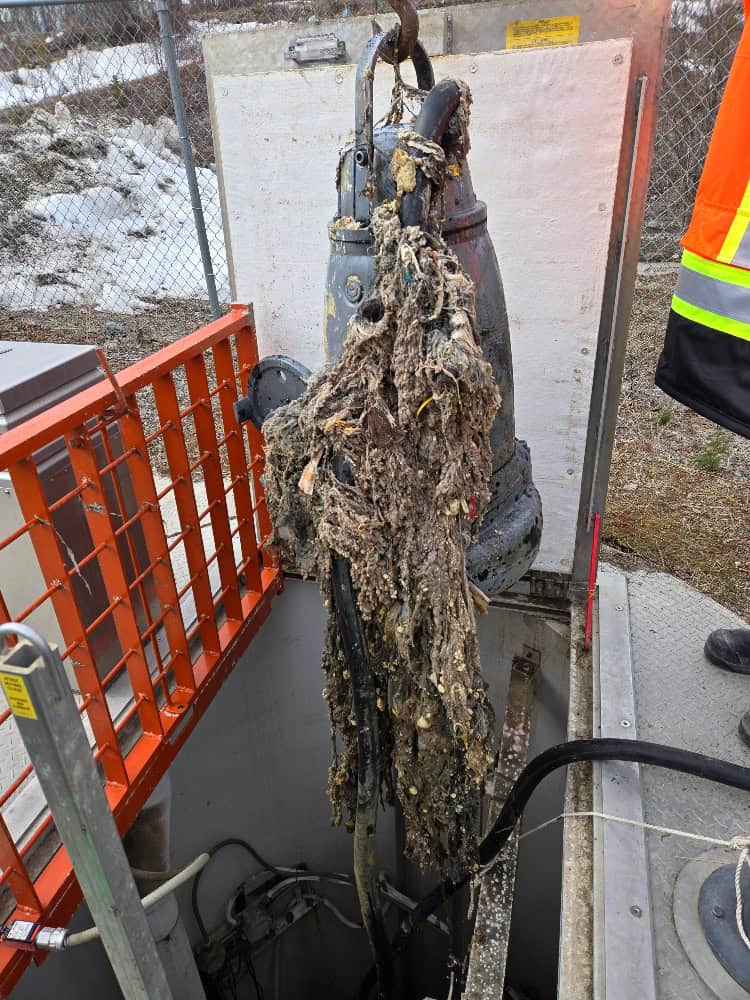
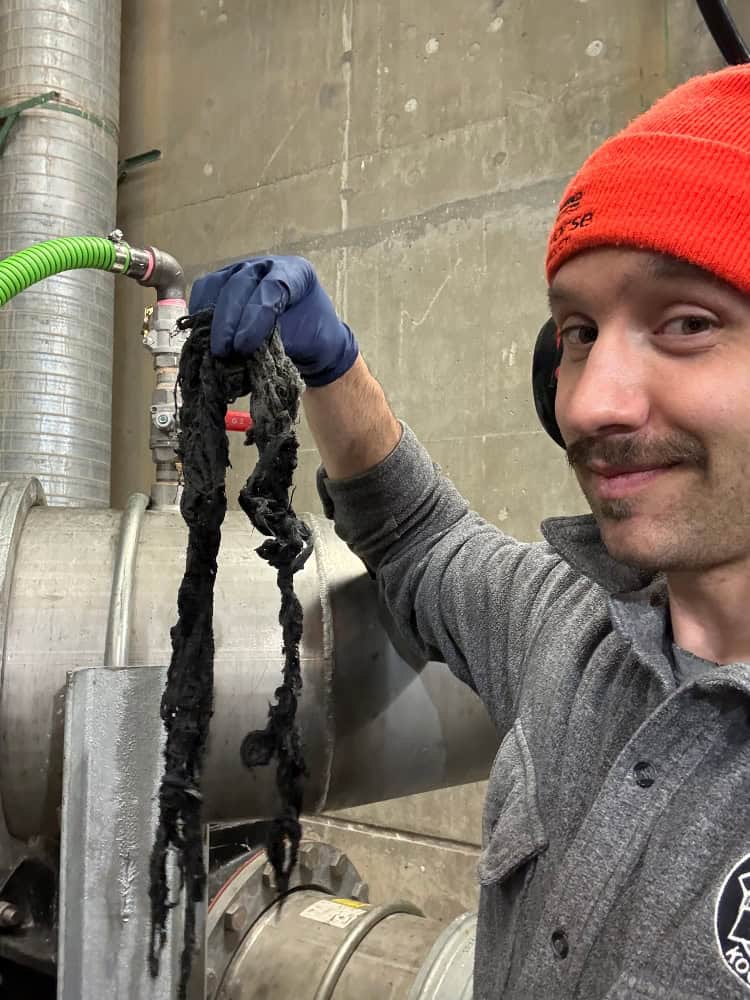
Speaking to what residents can do to be more responsible with their household plumbing, Van Lankveld cautions folks to stop flushing so-called flushable wipes, as they are not, in fact, flushable. Wipes fail to break down like toilet paper and can stick together in wads, which clogs pipes.
“That’s a huge problem with our municipality, as well as most other municipalities across North America,” he says. “Flushable wipes are not flushable.”
While Van Lankveld’s work keeps him in the office, he praises the workers with their boots on the ground operating the facilities, maintaining the pipes and fixing issues like clogs and bursts.
“It’s a very elaborate and intricate network, whether it’s on the drinking-water side or the wastewater side,” he says. “Once one thing goes wrong and there’s a backup in someone’s house, then there’s a major problem. We try not to get there, as much as possible, and a lot of that means redundancy and regular checks and regular inspections and maintenance. That doesn’t always look like it’s imperative, and quite often what you see is a couple guys in high-vis driving around doing stuff, but those people are really good at what they do and I really want to give a shout out to them.”
Visit whitehorse.ca/living-in-whitehorse/water/water-system to learn more about wastewater treatment in Whitehorse.