
Conservation efforts have helped to save the trumpeter swan
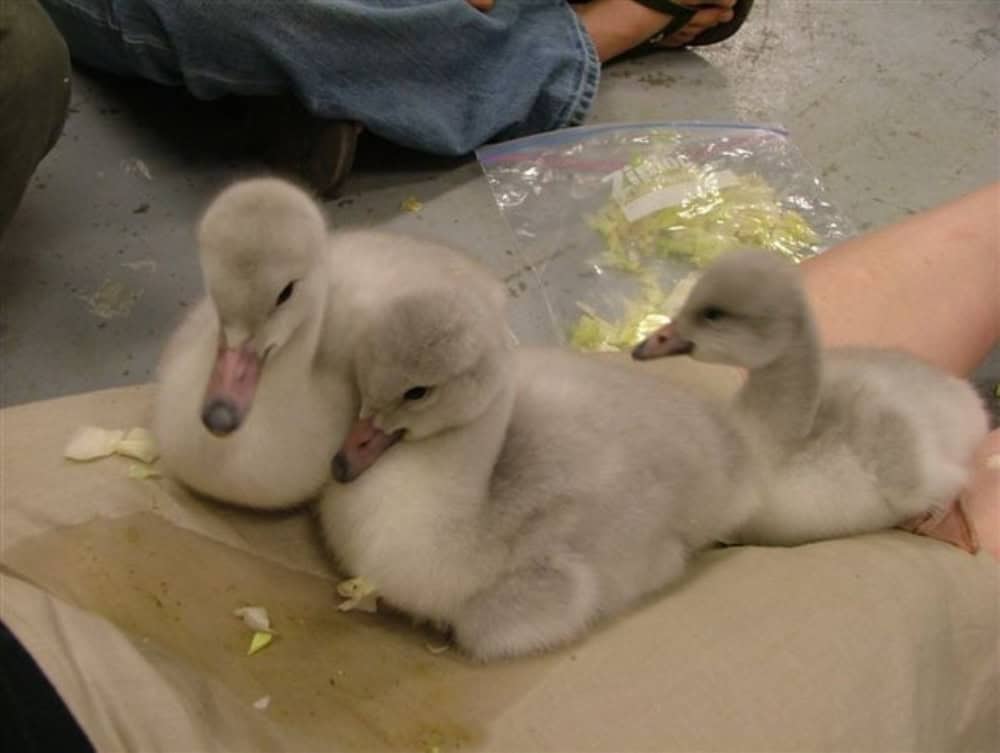


Though trumpeter swans are a familiar sight for Yukoners, people living in the east are only recently catching glimpses of these big white birds. Conservation efforts across North America are re-establishing populations in wetlands that haven’t had swans in more than a hundred years.
Trumpeter swans once ranged across North America from coast to coast. As immigrant settlers spread across the continent, the abundance and size of swans made them favourable for hunters. Their primary feathers were popular as writing quills, and the soft down feathers used as insulation or filling for mattresses. There was also a lucrative trade in swan skin to make gloves, and an eight-kilogram bird provided a lot of meat for a hungry family.
By the 1930s, only a few hundred trumpeter swans remained, isolated in small pockets in the west. The U.S. National Parks Service conducted a survey in 1932 that found only 69 swans in all of the continental United States. An international conservation campaign was launched to save these charismatic birds from extinction.
Hunting was banned and waterfowl refuges were set up to give the swans safe places to nest and raise their young. Many areas participated in active reintroduction programs, collecting eggs from nests in Alaska where they had later discovered healthy populations. Most importantly, wintering grounds were protected so that swans could escape the cold and ice before returning to the North to breed.
These conservation efforts, along with the swan’s ability to adapt to urbanization, allowed the numbers to gradually increase. In 1996, the trumpeter swan was “de-listed” (removed from the endangered species list) and deemed “Not at risk.” Their populations are healthy and sustainable.
Swan numbers at Swan Haven have remained relatively constant since we started tracking in the 1990s, as this was after the overall population had recovered. Though the number of swans continues to increase in North America, the amount of space and food available at McClintock Bay remains constant and can only feed so many birds.
The return of the trumpeter swan is an amazing success story and important reminder that conservation efforts can work. If we are willing to make changes and work together, it’s possible to save wildlife from extinction. You can help trumpeter swans by keeping your distance from the birds at places like Swan Haven, Tagish Narrows, Johnson’s Crossing, Nares Lake and Shallow Bay, so they can rest and eat on their journey north. In particular, keep dogs on a leash and well away from the birds, as your dog may look like a predator and significantly stress the birds.
Learn more about the history of the recovery of trumpeter swans and the impressive biologists who made it happen in the film Return of the Trumpeters showing on April 2 as part of A Celebration of Swans. Visit Yukon.ca/swans for complete event details.
CALL OUT BOX
Varying levels to being labelled “At risk”
Special concern: a species with characteristics that make it particularly sensitive to human activities or natural events
Threatened: a species likely to become endangered if limited factors are not reversed
Endangered: a species facing imminent extirpation or extinction
Extirpated: a species that no longer exists in the wild in a certain location, but exists elsewhereExtinct: a species that no longer exists


